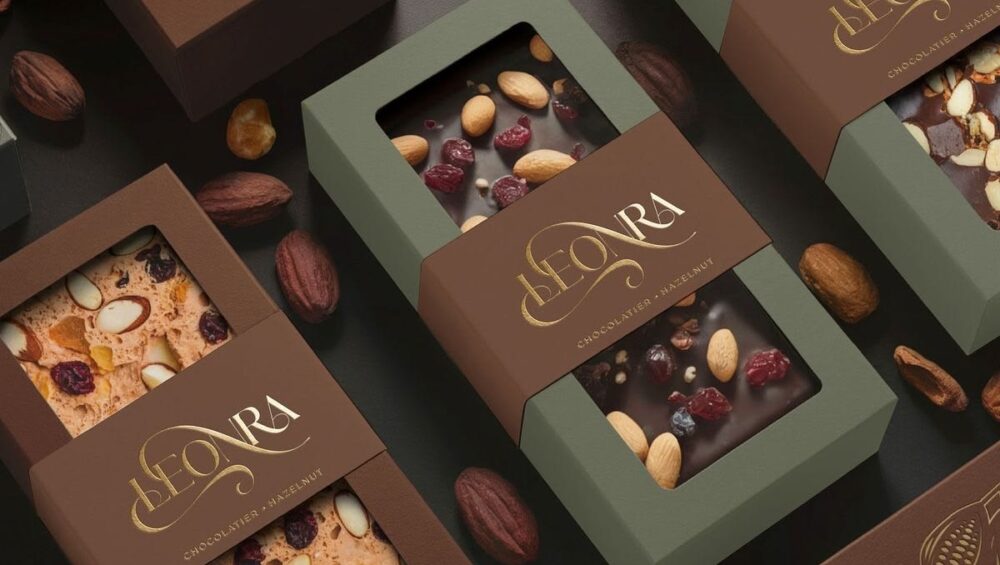
Custom Chocolate Boxes for Premium Branding and Product Presentation
Custom Chocolate Boxes are at the centre of the perception of chocolate products at the point of purchase. The physical response of a customer with a brand usually begins with packaging, and the touch point of the box creates anticipation prior to the opening of the product. The combination of structural strength, print clarity, and surface finishes plays the role of communicating quality without the need to explain it.
In addition to presentation, packaging has to maintain the integrity of the chocolate during storage and transportation. Materials and construction are required to meet the demands of temperature sensitivity, handling pressure, shelf placement, and others. The careful box design balances the aesthetic and the functionality to enable the brands to be consistent in their looks during retail, gift, and shipping environments.
Market Demand
The mounting retail competition has also led to more interest in the Custom chocolate boxes wholesale in search of scalable solutions without undermining the presentation standards. Bulk production provides an opportunity to control colors regularly, determine the die lines accurately, and predict costs per unit (large volumes of distribution). These are important factors when dealing with businesses dealing with more than one stock-keeping unit or with seasonal product lines.
Long-term brand planning is also supported by wholesale production. In situations where the packaging format is the same, marketing departments can coordinate promotions, inserts, and labeling without repetitive structural modifications. This stability enhances the efficiency of operations, besides strengthening brand recognition on both the physical and digital touchpoints.
Regional Expectations
Custom chocolate boxes UK in well-known retail markets have certain expectations of print detail, material weight, and presentation of regulations. Buyers tend to equate thicker board stocks and restrained finishes with premium positioning, particularly with confectionery. The packaging that is in conformity with these expectations enhances trust at the shelf level.
There are also benefits of regional sourcing, like shorter lead times and predictable replenishing cycles. Local or national brands do not need to be repackaged and instead have the advantage of packaging formats that do not have to be redesigned to fit the local or national market. It is a way of lessening the tension between production, distribution, and retail placement.
Printing Precision
The worth of the custom-printed chocolate boxes in the competitive retail stores depends on the quality of graphics used. The perception of packaging in store lighting is affected by color accuracy, sharp typography, and clean registration. Well-established brands can be ruined by poor execution of print.
The use of advanced printing methods means that subtle textures and layered finishes can be applied in order to add more depth to the visuals. These additions are not based on over- ornamentation but accuracy. When properly done, printed surfaces can convey art and trustworthiness, but not so much as to call attention to the product itself.
Structural Design
Good Custom chocolate packaging boxes are built and not decorated. The protection of chocolates during movement is determined by box style, internal spacing, and closure mechanisms. The failure of the structure may result in breakage, melting, or deformation, which destroys the brand’s credibility.
Additionally, well-packaged products enhance the unloading process. Actions and stable inserts Clean opening act as a guide to the customer through product discovery. This controlled communication enhances a feeling of concern and professionalism, which goes beyond the chocolate itself.
Flexible Ordering
In the case of the emerging brands, Custom chocolate boxes with no minimum will provide access to professional packaging without the unnecessary initial investment. The benefit of smaller production runs is that they enable the business to experiment with designs, seasonal or limited edition, without committing to producing high volumes. This is flexibility, which facilitates innovation and financial risk management.
There is also frequent design refinement due to the low minimum options. Customers can communicate with the brand, make changes to visuals, or be able to launch new assortments in short lead times. This flexibility is especially helpful in the markets where the presentation trends change rapidly, such as gift markets.
Brand Identity
Ownership is supported by visual means Custom boxes with logo in their places that do not seem beautiful but purposeful. The faster a brand is recognized depends on logo scale, positioning, and contrast. The similarity in the size and format of the boxes enhances the memorability and professionalism.
Unique presentation is also further added by Customised chocolate boxes, which portray the brand tone in terms of material choice and finishing. In conjunction with considerate messaging, packaging is also an extension of the brand voice, not a dead well.
Conclusion
The perception and performance in the chocolate market are affected by the strategic packaging decisions. Between Personalised chocolate boxes that are made to use as a gift and Wholesale chocolate boxes that assist in the retail distribution, each type of chocolate box has its own business reason. Sampling and promotions are handled by small chocolate boxes, and bulk by Custom chocolate boxes to provide consistency on a large scale.
The impetus of sustainability remains with the expectations, and eco-friendly custom boxes are becoming an increasingly popular choice among the brands that are attuned to the concept of responsibility. Regardless of the decision between Custom chocolate packaging in case of a new release, or amendments to the current types, properly done packaging is a sure-footed determinant of the success of a product and brand sustainability in the long run.