Food packaging and baking materials play an important role in the food industry. Bakeries, restaurants, cafés, and commercial kitchens need reliable paper products that make food preparation easier while supporting attractive presentation. Choosing the right material can improve efficiency, protect food, and create a professional experience for customers.
Businesses are also increasingly interested in packaging that reflects their brand identity. Printed logos, patterns, colors, and customized sizes can turn ordinary food packaging into an effective branding tool. When packaging is consistent across different products, customers can more easily recognize a business and remember its presentation.
Custom Parchment Paper gives businesses a practical way to combine functionality with personalized presentation. It can be produced in different sizes and designs for suitable baking, food preparation, and packaging applications. From bakeries preparing pastries and cookies to restaurants serving selected food products, customized paper can support both operational and marketing requirements.
1. What Is Parchment Paper?
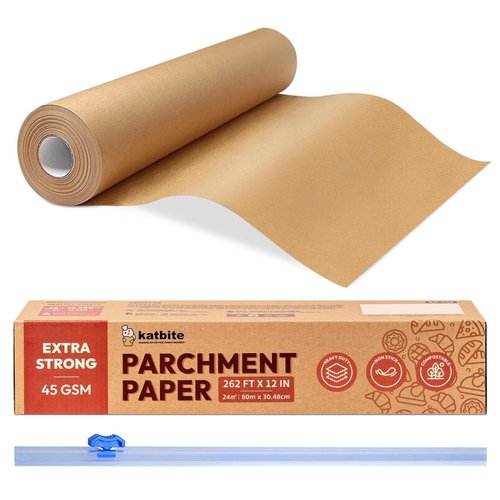
Parchment paper is a specially treated paper commonly used for baking and food preparation. It provides a convenient surface that can help prevent food from sticking to baking trays and pans when used according to the manufacturer’s instructions.
It is widely used by professional bakers and home cooks because it can simplify preparation and cleanup. Depending on its specifications, parchment paper can also withstand certain oven temperatures, making it useful for baking cookies, pastries, bread, and other products.
However, not every paper product has the same properties. Businesses should check the manufacturer’s temperature recommendations, coating information, thickness, and intended application before selecting a product for commercial use.
2. Benefits of Customized Parchment Paper
Customized parchment paper can help businesses combine practical food preparation with professional branding. Instead of using plain sheets, companies can choose printed designs that reflect their logo, colors, and overall visual identity.
For bakeries, branded paper can complement boxes, labels, bags, and other packaging materials. Restaurants and cafés can also use suitable printed sheets for food presentation, provided the product is designed for the intended application.
Customization also allows businesses to select specific sheet sizes and formats. This can make the paper easier to use with different trays, products, and preparation processes while helping reduce unnecessary material waste.
3. Parchment Paper vs. Grease-Resistant Paper
Choosing between different food papers requires an understanding of their intended purposes. Parchment paper is commonly associated with baking and oven use, while other grease-resistant papers are often selected for wrapping, lining, and serving foods containing oils and fats.
custom greaseproof paper wholesale can be particularly useful for businesses that want oil-resistant food packaging combined with personalized branding. It may be printed with logos, repeating patterns, or other design elements to create a consistent customer experience.
Although parchment and grease-resistant papers can sometimes be used in related applications, they should not automatically be considered interchangeable. Their coatings, temperature resistance, moisture performance, and food-contact properties can vary. Businesses should select materials based on the actual food and conditions in which the paper will be used.
4. Common Applications in Bakeries and Restaurants
Parchment paper has many applications in professional food preparation. Its versatility makes it useful for bakeries, pastry shops, restaurants, catering businesses, and commercial kitchens.
Common uses include:
- Cookie baking: Creating a suitable surface for baking cookies and biscuits.
- Pastry preparation: Supporting the preparation of selected pastries and baked goods.
- Bread production: Lining suitable baking trays and surfaces.
- Cake preparation: Supporting certain cake-baking processes.
- Food separation: Separating appropriate food products during preparation.
- Food presentation: Providing a clean and professional serving surface when the material is suitable.
The best application depends on the paper’s specifications. Businesses should consider product temperature, moisture, oil content, and contact time before using any paper for a specific food.
5. Printing and Branding Options
Packaging is an important part of brand communication. A bakery or food business can use customized paper to display its logo and create a consistent appearance across its products.
A simple logo or repeating pattern can often provide an effective design without distracting attention from the food. Businesses may also incorporate brand colors, illustrations, website information, or other visual elements depending on the available printing area.
Before ordering printed paper, businesses should ask suppliers about available printing methods and suitable inks. Materials used in food packaging should meet the relevant requirements for their intended application.
It is also helpful to request a printed sample before approving a large production run. A sample can help businesses check color accuracy, logo placement, print clarity, paper quality, and overall appearance.
6. How to Choose the Right Parchment Paper
Selecting the right paper begins with understanding how it will be used. A bakery that needs paper for oven baking may have different requirements from a restaurant looking for material for food presentation.
Important factors to consider include:
- Temperature resistance: Check the maximum recommended operating temperature.
- Paper thickness: Select a suitable weight for handling and production.
- Grease resistance: Consider the fat content of the food.
- Moisture resistance: Determine whether the product needs additional protection.
- Sheet size: Choose dimensions that fit trays and food products.
- Printing: Confirm that the design and printing process suit the intended application.
- Food-contact suitability: Request relevant product documentation from the supplier.
Testing samples with actual products is recommended before placing a large order. This allows businesses to evaluate how the material performs under normal production and serving conditions.
7. Sustainability and Responsible Packaging
Environmental considerations are becoming increasingly important for food businesses. Paper-based packaging can be part of a more responsible packaging strategy, but businesses should avoid assuming that every paper product has the same environmental properties.
Coatings, inks, treatments, and other components can affect recycling or composting options. Businesses should ask suppliers about the composition of their products and request