
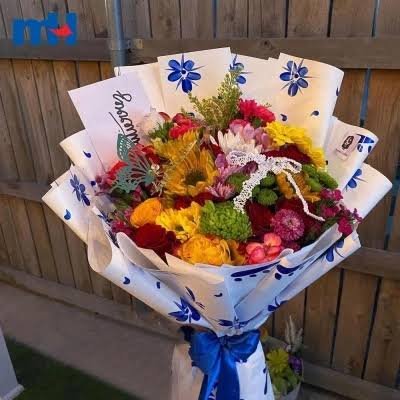
Flowers are often purchased for special occasions, celebrations, gifts, and everyday moments. While the flowers themselves are the main attraction, their presentation can have a major impact on the customer’s experience. Attractive wrapping can make a bouquet look more elegant while also helping protect the flowers during handling and transportation.
For florists and flower shops, packaging is also an important part of brand identity. A carefully designed wrapping material can complement the colors and style of an arrangement while giving customers a memorable experience. Consistent packaging can help a business create a recognizable appearance across different bouquets and occasions.
Custom Flower Bouquet Paper provides florists with an opportunity to combine attractive presentation with practical packaging. Businesses can select different paper sizes, colors, patterns, finishes, and printed designs according to their brand and floral arrangements. Personalized wrapping can make bouquets look more professional while helping customers associate the presentation with a particular flower shop.
1. What Is Flower Bouquet Paper?
Flower bouquet paper is a wrapping material designed to surround and present floral arrangements. It can be folded, layered, rolled, or shaped around bouquets to create different styles and levels of coverage.
Florists may use different types of paper depending on the flowers, bouquet size, moisture level, and desired appearance. Some wrapping materials focus primarily on visual presentation, while others provide additional resistance to moisture or handling.
The right paper should be easy to fold and shape without tearing. It should also complement the flowers rather than overpower them. Choosing appropriate dimensions can make the wrapping process faster and help create consistent results.
2. Why Customized Flower Packaging Matters
Personalized packaging can help a florist develop a recognizable visual identity. A printed logo, repeating pattern, or carefully selected color combination can make bouquets instantly associated with a particular business.
Branded wrapping can also add value to gift purchases. Customers often expect flowers to look attractive when they are presented to someone else, and professional packaging can contribute to that experience.
Customization provides flexibility as well. Florists can create different designs for weddings, Valentine’s Day, Mother’s Day, birthdays, corporate events, or everyday arrangements. Seasonal artwork can help businesses refresh their presentation without changing the entire packaging strategy.
3. Choosing the Right Paper for Floral Arrangements
Flowers naturally contain moisture, and freshly prepared bouquets may have damp stems or water droplets. Because of this, florists need to consider how the wrapping material will perform when exposed to moisture.
custom greaseproof paper wholesale can be considered for selected floral packaging applications where resistance to oils or certain surface contaminants is useful. However, grease resistance does not automatically mean that a paper is waterproof or specifically designed for direct contact with wet flower stems.
Florists should therefore discuss their intended application with suppliers. If the paper will come into contact with water, condensation, or damp stems, it is important to verify its moisture resistance and suitability rather than relying only on its appearance.
4. Popular Styles of Bouquet Wrapping
Flower wrapping can be designed in many different ways depending on the desired look. Minimalist arrangements may benefit from plain or lightly printed sheets, while luxury bouquets may use layered papers and premium finishes.
Common styles include:
- Classic folded wrapping: Creates a clean and traditional bouquet presentation.
- Layered wrapping: Combines multiple sheets to create depth and visual interest.
- Printed wrapping: Uses logos, patterns, or brand elements for recognition.
- Kraft-style wrapping: Provides a natural and simple appearance.
- Colored wrapping: Matches or contrasts with the flowers.
- Luxury finishes: Uses specialty textures or finishes for premium arrangements.
The wrapping style should complement the flowers. Bright floral arrangements may work well with simple packaging, while neutral bouquets can be enhanced with stronger colors or patterns.
5. Branding Opportunities for Florists
Every bouquet can become an opportunity for brand exposure. When customers carry a professionally wrapped arrangement, the packaging can make the flower shop visible to other people and reinforce the business name.
A florist can print its logo, website, phone number, social media details, or a repeating brand pattern on suitable wrapping paper. The design should remain clean enough that the flowers continue to be the main focus.
Color selection is particularly important. Using the same colors across wrapping paper, ribbons, cards, bags, and storefront materials can create a consistent visual identity.
Florists should also consider how the printed design looks when the paper is folded. A logo placed near an edge may become hidden, while a repeating pattern can remain visible regardless of how the bouquet is wrapped.
6. Selecting the Right Size and Quality
The size of the paper should match the bouquets being prepared. Small arrangements require less material, while large wedding or event bouquets may need wider sheets with greater coverage.
Paper strength is another important consideration. Very thin material may tear during folding, especially when multiple layers are being manipulated. Stronger paper can provide better handling while maintaining a neat appearance.
When selecting a product, consider:
- Sheet dimensions
- Paper thickness
- Moisture resistance
- Folding flexibility
- Print quality
- Surface finish
- Color options
- Minimum order quantity
Ordering samples before purchasing in bulk is a practical way to evaluate these characteristics. Florists can wrap actual bouquets and check whether the paper performs as expected.
7. Sustainable Flower Packaging
Sustainability is becoming increasingly important to customers and businesses. Florists may want packaging that uses paper responsibly and minimizes unnecessary waste.
However, not every paper product has identical environmental characteristics. Coatings, laminations, inks, and other treatments can affect recyclability and disposal options.
Businesses should ask suppliers about paper sourcing, recycled content, certifications, and the environmental properties of any coatings. If a supplier makes compostable or recyclable claims, appropriate supporting information should be requested.
Using the correct size of paper can also reduce waste. Florists can measure their common bouquet sizes and choose packaging dimensions that provide sufficient coverage without requiring excessive material.
8. Finding a Reliable Bouquet Paper Supplier
A reliable supplier can make a significant difference in packaging quality and consistency. Florists should compare suppliers based on paper quality, customization options, printing capabilities, production capacity, and delivery times.
Before placing an order, ask for samples and detailed specifications. Important information may include paper weight, dimensions, coating type, printing method, moisture resistance, and available finishes.
It is also useful to request a complete quotation that includes printing costs, setup charges, minimum quantities, shipping, and expected production time. This makes it easier to compare suppliers based on the overall cost.